 Philadelphia Chinese Academy is proud to be the
 Philadelphia Chinese Academy is proud to be nominated as an Honoree for Language Immersion by
 Toddlers Gone Wild: Adventures Without Strollers, Pouches, and Trays
Parenting toddlers can be an all-hands-on-deck experience, and it’s completely natural to lean on helpful tools.
They simplify the chaos, keep things convenient, and, let’s face it, make our lives just a bit easier when juggling the endless demands of raising little ones.
But as much as these items help us manage the day-to-day, there’s also an opportunity to reflect on how they might gently be phased out to encourage our toddlers to grow in independence and gross motor skills.
This isn’t about doing everything “perfectly” but about taking small steps to support your child’s natural developmental milestones.
Here’s why it’s worth considering weaning off these everyday tools:
1. Strollers: Supporting Strong Legs and Independent Exploration
Strollers are a lifesaver, especially when we’re on the go or facing long days. However, over-reliance on them can limit a toddler’s opportunity to practice walking and exploring their surroundings.
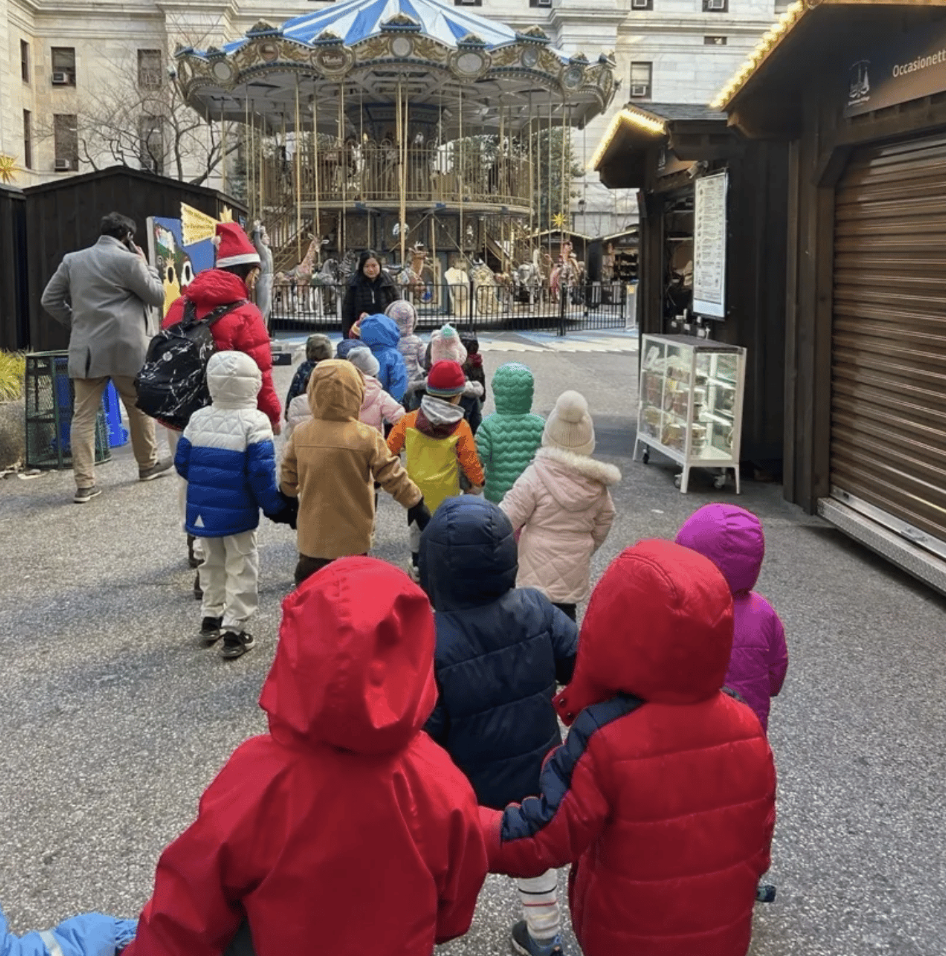
At PCA, we encourage children to walk longer distances as part of building endurance and confidence. For example, during the holiday season, our students walked over 10 city blocks with traffic lights to the Comcast Center to see the Christmas Spectcular. This experience not only allowed them to explore their environment but also gave them a sense of accomplishment and independence.
What You Can Try:
• Start with short, manageable walks where your toddler can stretch their legs and build stamina.
• Offer choices to keep them engaged: “Would you like to walk to the grocery store or the park?”
• Use the stroller as a backup rather than the default for every outing.
This simple change helps toddlers develop balance, coordination, and endurance, making them more confident walkers over time.
2. Smoothie Pouches: Building Oral and Fine Motor Skills
Smoothie pouches are undeniably convenient, especially when you’re on the move or trying to avoid a mealtime meltdown. But they can discourage toddlers from practicing important skills that relate to tongue movement and jaw strength as well as explore new food textures.
At PCA, we prioritize offering a diverse menu that encourages children to chew and try new foods. We teach infants how to hold and eat with spoons and forks. This not only helps with fine motor control, it also gives children confidence as well as independence. Meals are carefully planned to include a variety of textures, helping to develop oral motor skills and expand their palate.
What You Can Try:
• Transition to offering smoothies in an open cup or straw cup to encourage self-feeding skills.
• Gradually introduce whole fruits or soft finger foods alongside purees to expand their palate and chewing ability.
By shifting away from pouches, you’re helping your child strengthen their oral motor skills, which are key to eating, speaking, and self-regulation.
3. High Chairs with Straps: Encouraging Independent Mealtime Skills
High chairs with straps are a classic staple, offering convenience for both parents and toddlers. However, they can limit a toddler’s ability to develop crucial core strength needed for so many milestones.
At PCA, students sit in their own chairs at a table and are taught to use a placemat and silverware during meals. They also practice getting water on their own, fostering a sense of independence and responsibility. These simple routines help children gain confidence in managing mealtime tasks.
What You Can Try:
• Introduce a child-sized table and chair for snacks or meals where your toddler can sit independently.
• Allow them to practice getting in and out of the chair safely under supervision.
• Transition to using booster seats without straps at the family table, so they feel included in mealtime routines.
This change not only supports gross motor skills like climbing and balancing but also fosters a sense of independence and participation in family activities.
Why These Changes Matter
Each of these tools serves a purpose, and there’s no need to toss them out overnight. But as toddlers grow, they thrive on opportunities to move, explore, and practice doing things on their own. By gradually weaning off these items, you’re giving your child the gift of independence and laying the foundation for their physical and cognitive development.
An Empathetic Approach
As parents, we often feel pressure to “do it all,” and the idea of making even small changes can feel overwhelming.
Remember, this is about progress, not perfection.
Start with what feels manageable for your family and go at your child’s pace.
The goal isn’t to make life harder for you but to provide tools and insights to help your child grow in confidence and ability. And who knows—these small changes might just make things a bit easier in the long run, too.
Let’s cheer each other on in this parenting journey, one step (or tiny bite) at a time!