 Philadelphia Chinese Academy is proud to be the
 Philadelphia Chinese Academy is proud to be nominated as an Honoree for Language Immersion by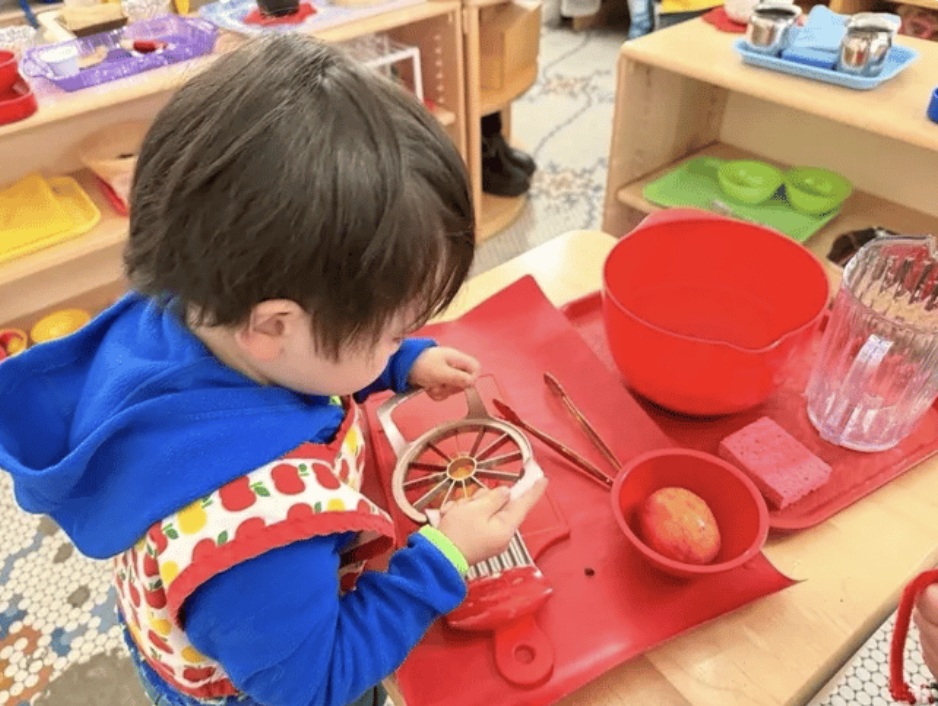
The 3-Hour Work Cycle: What It Is, Why On-Time Drop-Off Matters, and How It Changes Your Child
One of the defining features of an authentic Montessori classroom is the uninterrupted three-hour work cycle. For families new to Montessori, this can sound abstract or even rigid, especially when mornings feel unpredictable.
In reality, this uninterrupted block of time is a rare and meaningful gift for children. It is a luxury that many learning environments simply cannot offer. You might think of it as a daily spa for the mind, a protected stretch of time where children can settle, focus, and move through their work without being rushed or interrupted.
This protected time does more than support academic learning. It builds perseverance, resilience, and what researchers often call grit. Children learn to stay with a task, work through difficulty, make mistakes, and try again. These habits form the foundation for confidence, motivation, innovation, and lifelong learning.
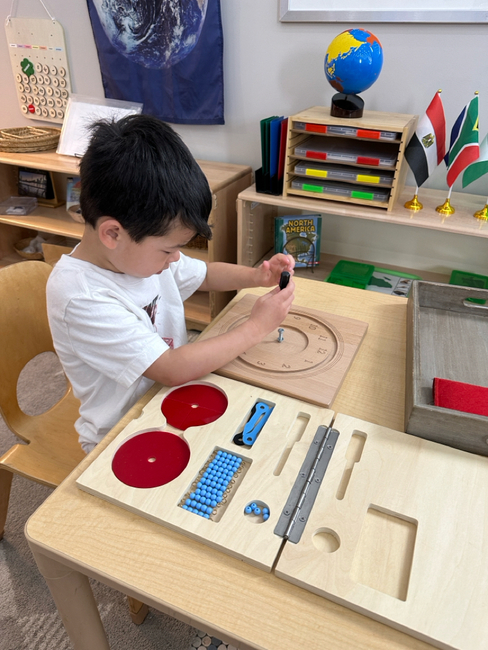
During the work cycle, children ease into their environment, choose activities that meet them where they are developmentally, and move between tasks at their own pace. Teachers observe carefully, offer individual lessons when a child is ready, and allow time for repetition, refinement, and skill-building. Learning unfolds gradually and organically, often in ways that are difficult to replicate in shorter or more fragmented schedules.
Take an apple-cutting activity, for example. A child is not simply cutting fruit. They put on an apron, gather the materials, rinse the apple, dry it, use the apple cutter with care, enjoys the apple with friends, and then cleans up the whole thing. Each step builds coordination, sequencing, focus, and independence. When something is difficult, the child slows down, tries again, and persists. Imagine what a distraction or interruption would do in the middle of this multi-step process.
We Understand That Mornings Can Be Hard
We know that mornings with young children rarely unfold the way we imagine. Sometimes it takes far longer than expected to find the one jacket a child is willing to wear, the blue one with yellow polka dots, of course. Sometimes there are tears in the hallway because a beloved stuffy has been left behind and absolutely must come along. Sometimes a child refuses to wake up, has an accident right before it is time to leave, or gets carsick just as you pull into the last parking spot on 7th Street.
These moments are part of early childhood. They are not failures. They are signs of growing bodies, big feelings, and developing nervous systems.
We also recognize that traffic, weather, siblings, and unexpected events are part of family life, and no one expects perfection. When lateness is truly unavoidable, we understand.
What we ask for is a shared awareness of how important those early hours are and a collective effort to protect them whenever possible. When children arrive on time and are able to settle into the work cycle alongside their peers, the entire classroom benefits, including your child.
Why Consistency Is Essential for Deep Learning
What makes the work cycle so effective is consistency. Children do not arrive at school already focused and ready for deep work. They ease into it. They observe their peers. They begin with something small. Over time, their concentration builds, and many children eventually reach levels of focus that surprise even their parents.
This process hinges on children arriving on time and being able to move through the full rhythm of the morning without interruption.
How Late Arrivals Affect the Classroom Environment
When a child arrives after the work cycle has begun, the classroom rhythm shifts. Teachers may need to pause instruction to help the child transition. Other children, who may already be deeply engaged, are naturally distracted by movement and activity at the door. The child arriving late often feels rushed or out of sync, even when they are warmly welcomed.
These moments may seem small, but they are impactful, especially when they happen repeatedly. Protecting the work cycle helps preserve the calm, focused environment that allows all children to thrive.
A Helpful Comparison: How Adults Experience Focus
A helpful way to think about the work cycle is to consider how adults work. Most of us need uninterrupted time to concentrate on something meaningful, whether we are preparing a presentation, writing an email that requires careful thought, or learning a new skill. If we are interrupted just as we are settling into a rhythm, it can be surprisingly difficult to regain that same level of focus. The momentum is gone, and it may not return for hours.
Many of us also need time to ease into the day, perhaps through a morning Pilates class or a first cup of coffee enjoyed in silence.
Children experience this need for uninterrupted time even more strongly because they are still developing the ability to regulate their attention and emotions. The three-hour work cycle gives them the same opportunity adults seek when they try to protect their own focus, allowing their brains and nervous systems to build strength over time.
How Uninterrupted Mornings Support Your Child’s Development
When children experience consistent, uninterrupted mornings, they build essential skills that extend far beyond academics. These include executive functioning skills such as planning, organization, emotional regulation, persistence, and follow-through.
Families often notice that their children become more independent, more confident in their abilities, and more capable of managing transitions. Children talk more about their work, take pride in completing tasks, and show greater patience when challenges arise. Over time, they develop the ability to stay with something even when it is difficult, which is one of the strongest predictors of future success.
Why On-Time Arrival Is a Gift to the Entire Community
Arriving on time supports your child’s ability to fully participate in the work cycle, and it also respects the learning environment of the entire classroom. When children are given the gift of uninterrupted time, something meaningful happens. They are able to take risks, work through challenges, and stay with a task long enough to experience both mistakes and mastery.
As researcher Angela Duckworth reminds us, deep focus and sustained effort lead to innovation, allow space for mistakes, and ultimately build grit. These qualities do not develop when learning is rushed or fragmented. They grow when children are given time, trust, and consistency.
Thank you for partnering with us in protecting this time and in helping create a calm, respectful, and purposeful learning environment where every child can do their best work.