 Philadelphia Chinese Academy is proud to be the
 Philadelphia Chinese Academy is proud to be nominated as an Honoree for Language Immersion by
Multi-Age Magic: Why Mixed Ages Accelerate Social + Cognitive Growth
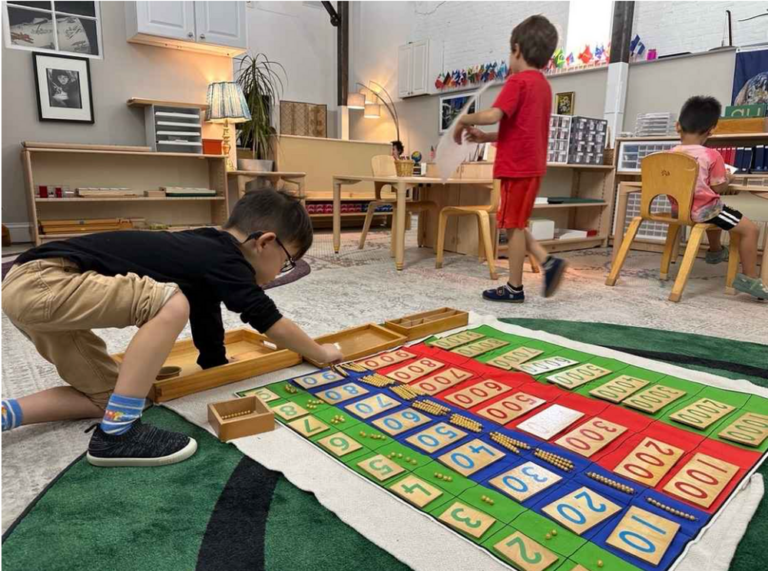
One of the first things parents often notice in a Montessori classroom is that children of different ages learn together. At first, this can feel unfamiliar. Many of us grew up in strictly age-based classrooms, where children moved through school alongside peers born in the same year.
In a Montessori environment, mixed-age classrooms are intentional. They are not a logistical choice but a developmental one.
When children of different ages learn together, something powerful happens. Learning becomes more human, more social, and more deeply rooted in real life.
Learning Happens Through Relationship
In a mixed-age classroom, children are constantly learning from one another. Younger children observe older peers and absorb skills, language, and behaviors simply by being nearby. Older children reinforce their own understanding by modeling, explaining, and helping.
This kind of learning mirrors how children grow outside of school. Siblings, cousins, and neighborhood groups are rarely the same age. Children naturally learn by watching and participating alongside others who are slightly ahead of them.
In the classroom, this creates a culture where learning feels shared rather than competitive.
Older Children Learn Leadership, Not Just Academics
When older children help younger ones, they are not just being kind. They are practicing leadership, patience, empathy, and responsibility. Explaining a concept requires clarity of thought. Offering help requires emotional awareness.
These moments strengthen confidence in a way that worksheets and praise cannot. Older children begin to see themselves as capable contributors to their community, not just individual learners moving through a curriculum.
This sense of responsibility often leads to greater focus and maturity.
Younger Children Learn What Is Possible
For younger children, mixed-age classrooms provide a natural sense of direction. They see what is possible, not through adult instruction alone, but through daily observation.
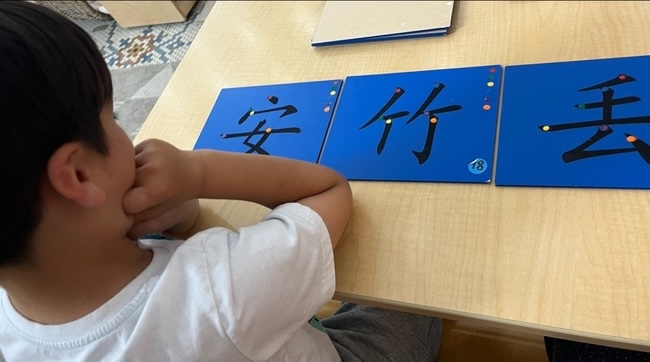
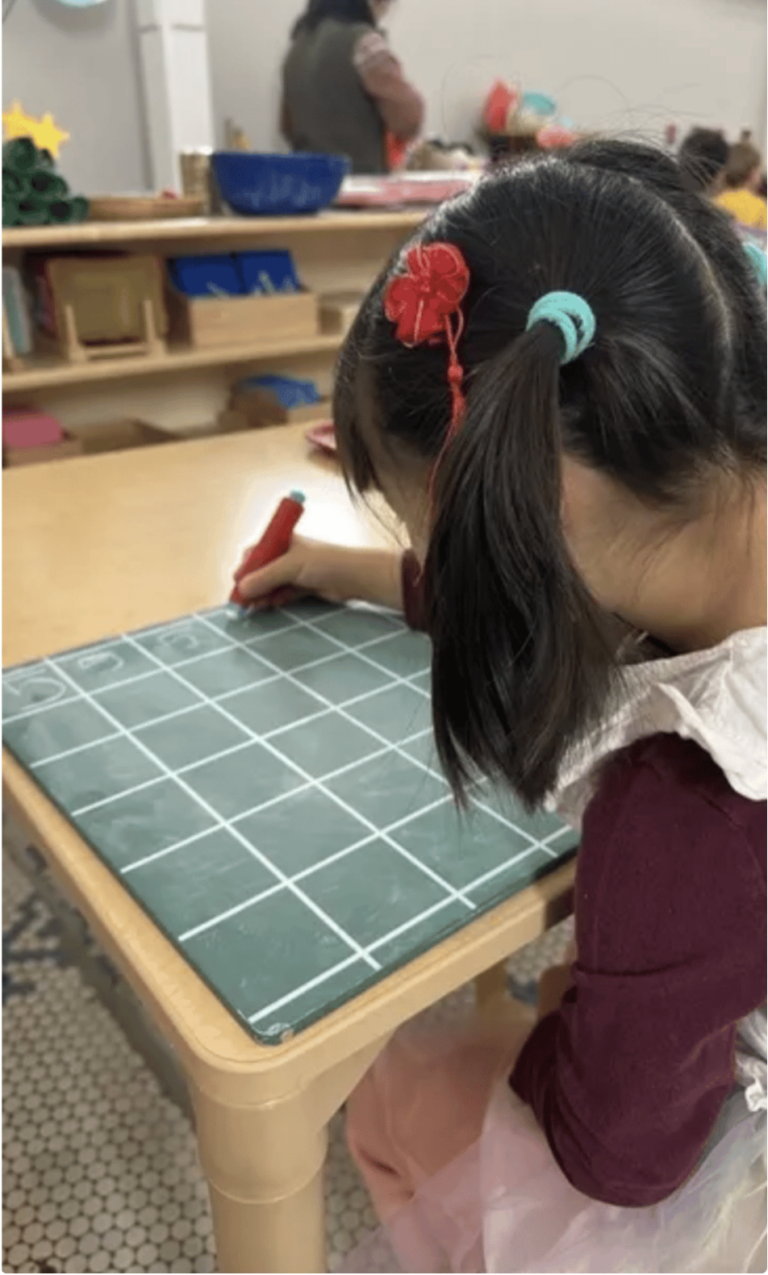
A younger child watching an older peer trace Chinese characters, play the bells, or complete a long work cycle begins to imagine themselves doing the same. This builds motivation from within rather than through external pressure.
Learning feels attainable because it is modeled by someone they know and trust.
Social Skills Develop Organically
In mixed-age classrooms, children learn how to navigate a wider range of social interactions. They practice adjusting their communication, taking turns, offering help, and asking for support.
Because children are not all at the same developmental stage, there is less comparison and less pressure to perform. Instead, children learn to collaborate, respect differences, and move at their own pace.
Conflict resolution also becomes more meaningful. Children learn to negotiate, empathize, and repair relationships in a community that feels stable and familiar.
Cognitive Growth Deepens Through Repetition and Observation
Montessori classrooms allow children to revisit materials and concepts over multiple years. This repetition supports deeper understanding rather than surface memorization.
Younger children absorb lessons through observation long before they actively participate. Older children refine their understanding by returning to familiar materials with new insight and responsibility.
Learning unfolds gradually, building a strong foundation that supports confidence and independence.
A Classroom That Feels Like a Community
Mixed-age classrooms create continuity. Children stay with the same teachers and peers for multiple years, allowing trust and connection to deepen.
This sense of belonging supports emotional security, which is essential for learning. Children are more willing to take risks, ask questions, and persist through challenges when they feel known and supported.
For many families, this continuity is what makes the classroom feel like a second home.
Preparing Children for Life, Not Just the Next Grade
Life is not divided by age groups, and neither is learning outside of school. Mixed-age classrooms prepare children for real-world environments where collaboration, empathy, and adaptability matter.
Children learn how to lead and how to follow. They learn how to help and how to ask for help. They learn that growth looks different for everyone and that learning is not a race.
This is the quiet magic of mixed-age classrooms. Growth happens naturally, relationships deepen learning, and children become confident participants in a shared community.